
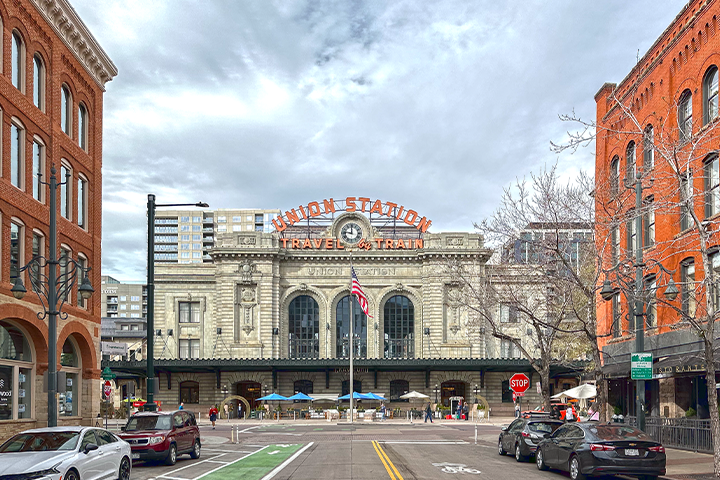
Denver Union Station, a majestic landmark nestled in the heart of the Mile High City, stands as a testament to the city's rich history and enduring spirit. Originally opened in 1881 during the golden age of train travel in the American West, the station served as a bustling hub for travelers and adventurers alike. However, as the allure of automotive and airplane travel grew and train travel declined, the station fell into disuse and disrepair. In the early 2000s, the city of Denver embarked on a mission to breathe new life into this historic gem, transforming it into a vibrant transit hub and community space once again.
Julie Dunn, the voice of Denver Union Station's public relations department, paints a vivid picture of the station's glorious past and its exciting present. "We're standing in the great hall of Denver Union Station, which is Denver's landmark train station, originally opened in 1881," she explains. "We've got a ton going on here at all times. We've got 112 hotel rooms at the Oxford Hotel. We have 10 restaurants, multiple stores needing space, and the Great Hall itself, which is known as Denver's Living Room."
Dunn highlights the significance of the station's history, stating, "The Union Station Alliance reopened the train station almost 10 years ago. In 2014, we put $54 million into this historic building to revitalize it, to bring it back to its original glory, and to also reactivate it."
One of the most critical components of the restoration project was the implementation of a new heating and water system that would support the facility’s needs. Michael Michna, the chief engineer overseeing the project, elaborates on the challenges they faced and the innovative solutions they implemented. "The building had fallen into disrepair over the years," he explains. "The Navien system that we had at the Oxford Hotel had been up and running for a year, and within the first five months of the Navien Domestic Water System and Boiler Heating System, we had saved from 30 to 40% on energy costs. And it convinced the ownership at Denver Union Station to go ahead with the project.”
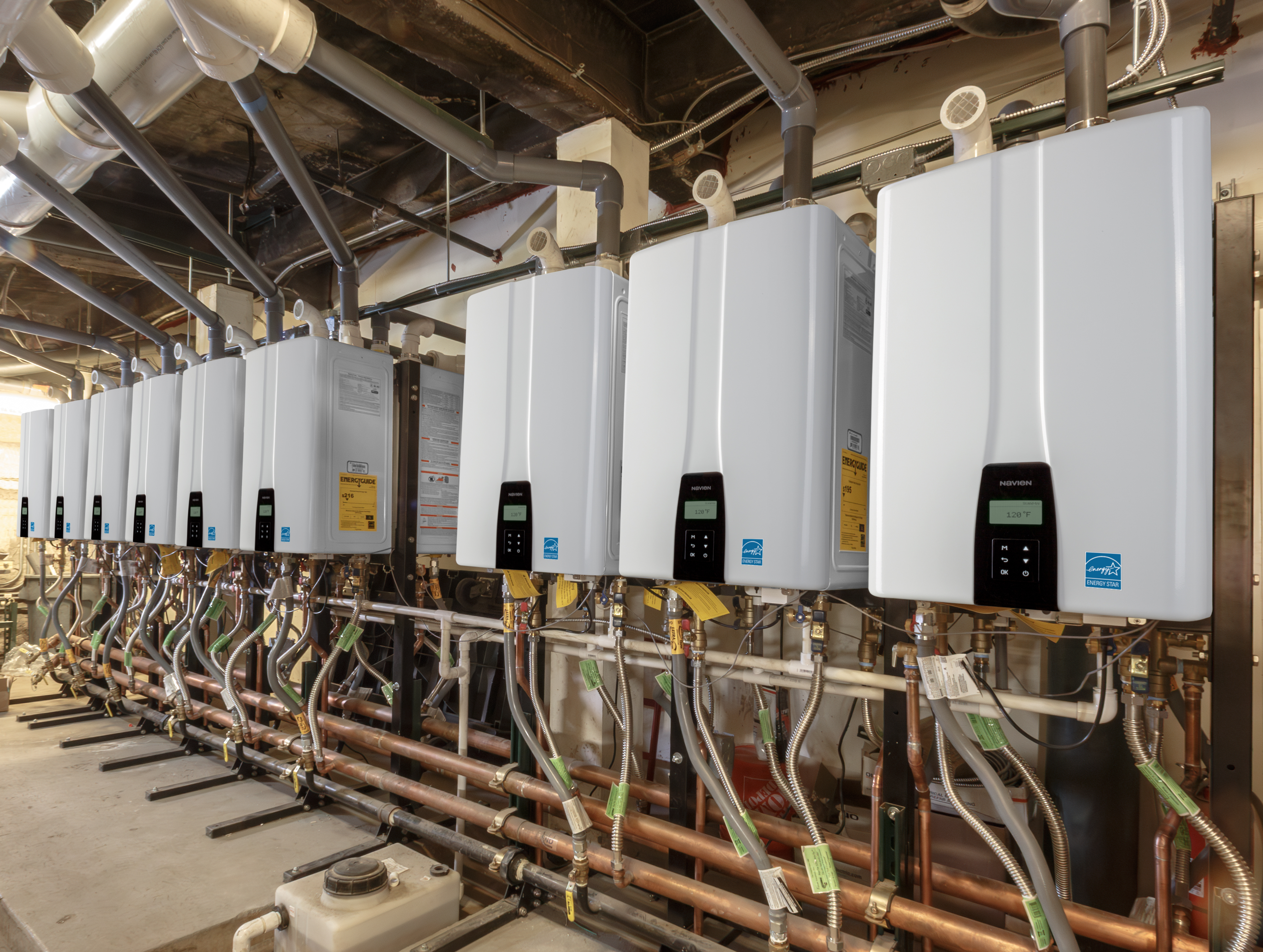
“Since we had been looking for so long for a system, it made nothing but sense to bring in the Navien boilers and do the same system at Denver Union Station, replacing the two steam boilers that were downstairs that were over 4 million BTUs a piece.”
Michna and his team brought in HBC Mechanical to help remove the existing boilers and install 18 Navien NPE-2 tankless water heaters, along with nine Navien NFB-C boilers for the building’s heating system.
Joe Jensen, superintendent for hydronics systems for HBC Mechanical, describes their innovative approach. "The mechanical room is in the basement area, so we had limited access through a small elevator,” Jensen explained. “We had to tear the old boilers apart into pieces and bring them up through the elevator. We would've had to do the same thing with any new equipment that we would've brought in, with the exception of the Navien units — they were small enough where we could bring them up and down the elevators and get them into the room where they needed to be installed relatively easily. It saved us a lot of time.”
The Navien systems, renowned for their installation flexibility, proved to be the perfect solution for Denver Union Station's needs. Jensen mentions the importance of the Navien systems’ modular design during the installation, stating, "One of the old boilers was used for the domestic water system, and the other was used for the heating system. We had to maintain the domestic water system online while we demoed the first boiler and installed all of our new Navien water heaters in that space. Once we got that up and running, we were able to switch over to the heating side of the building and demo the other boiler, keeping the water system online during the entire process.”
One of the many challenges working in a historic building was the fact that they weren’t able to cut into any existing walls. Jensen explains how Navien’s common venting system helped meet those challenges. “We installed 18 of the Navien NPE-2 tankless condensing water heaters and nine Navien NFB-C boilers, and we've used a common venting system, which alleviated a lot of the problems here. This is a historic building, we weren't able to penetrate the walls or anything, so that completely solved our venting issues.”
Navien NFB‑C boilers feature an advanced 7-inch touchscreen control panel for easy setup and operation, as well as an outdoor reset feature that continuously adjusts the water temperature — providing more heat when it's colder and less heat when it's warmer.
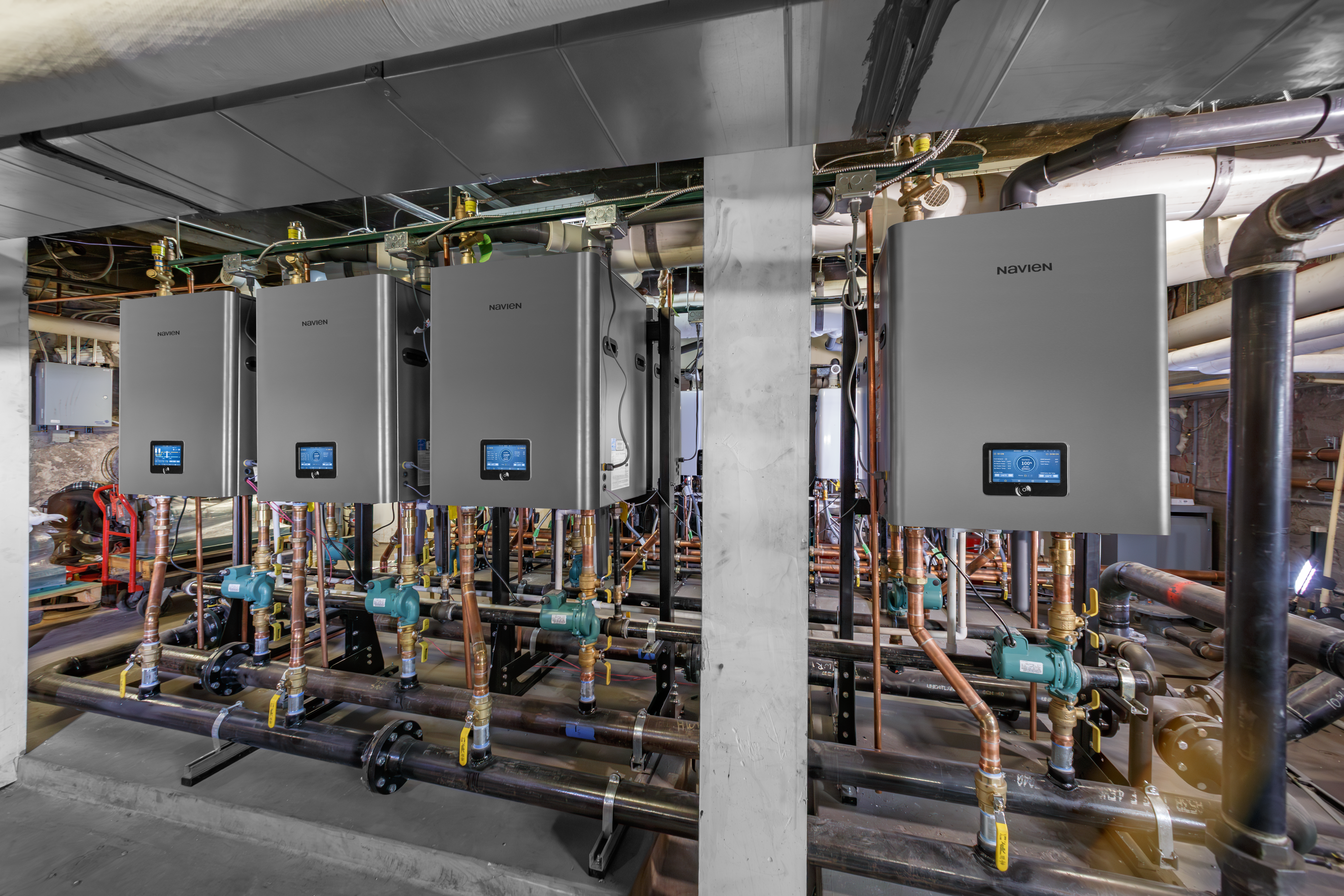
“The Navien system comes with an onboard outdoor reset system that's already prebuilt in,” Michna said. “The outdoor reset works beautifully in Denver because in the warmer season you can have 70 to 80 degrees outside during the day. It can go down to the 40s and 30s in the evening time. And with that outdoor reset, it automatically changes the temperature of the boiler system to meet the needs of the outside temperature. We've been setting ours so that the boilers don't even come on until it reaches 50 degrees outside, and they're just barely idling at that temperature. And then as it gets colder into the 30s or well below zero, the system slowly ramps up to meet the demand and then of course, automatically comes back down after those temperatures start rising up again outside.”
But perhaps the most impressive aspect of the Navien system is its overall efficiency. Since the installation of the NFB‑C boilers, Denver Union Station has seen an average monthly reduction of nearly 25 percent in natural gas usage, resulting in significant savings in operating costs. "The Navien boilers are 97% efficient," Michna explains. "They come online as needed, as the temperature needs of the building change. And it's the most efficient system I've ever seen. It's been running for two months, and we've already seen a savings of 30% on the natural gas usage.”
As Denver Union Station continues to thrive as a vibrant community space and transit hub, it serves as an example of what can be achieved through innovation and perseverance. With its rich history preserved and its infrastructure modernized, it stands as a brilliant use case for historic landmarks everywhere.
In the words of Julie Dunn, "Denver Union Station is more than just a train station. It's a symbol of our city's past, present, and future." With each passing day, it continues to inspire awe and admiration, a testament to the enduring spirit of the Mile High City.


